 English
  Norsk
Norsk  Polski
  Lietuvių kalba
Labour law for employers
Labour law is a strategic subject area that affects the company's risk, culture and profitability. For employers, it's about ensuring good processes, correct decisions and documentation that can withstand scrutiny - whether you're recruiting, reorganising or terminating an employment relationship.
We assist management, HR and boards in the entire spectrum of labour law. Our advice combines precise law with business understanding, enabling you to implement measures efficiently and with low dispute risk. We ensure clear choices, predictable progress and solid compliance.
Labour law includes the employer's right to manage, requirements for objectivity and proper process, co-determination and collective bargaining, hiring and temporariness, privacy and control measures, as well as business transfers. In practice, this means finding the right balance between the need for change and the duty to safeguard employees - with a sound basis for decision-making, proper case management and good communication.
For organisations undergoing change, it is particularly important to be in control of selection criteria for downsizing, correct handling of probationary periods, the distinction between termination of employment and redeployment, and the framework for non-compete and non-solicitation clauses. We help you identify risks at an early stage and choose solutions that are legally and commercially viable.
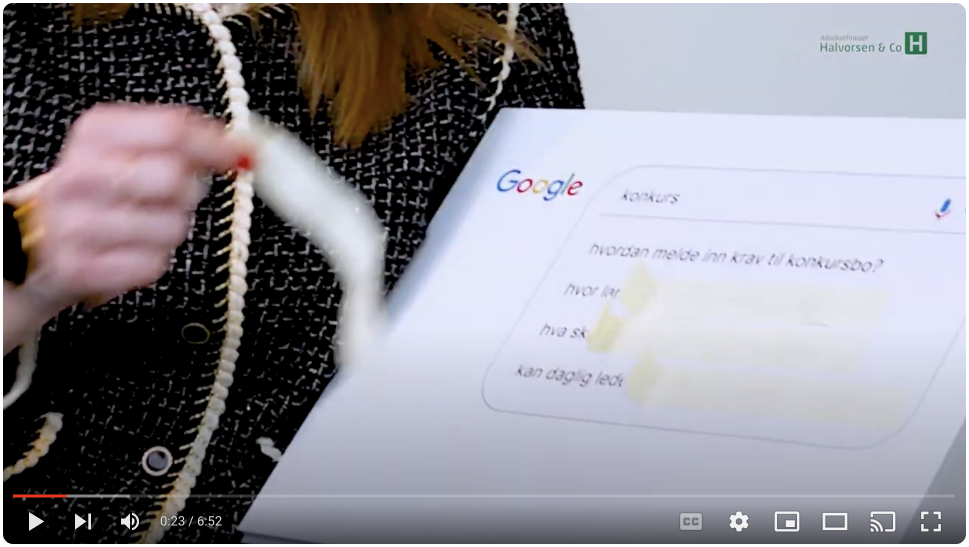
Our lawyers answer frequently Googled questions about labour law
Watch the video nowWhy choose Advokatfirmaet Halvorsen for labour law cases?
- Business-orientated advice: We translate complex law into actionable decisions for management and HR.
- Strong dispute and negotiation experience: We handle demanding processes in and out of court.
- Proactive solutions: We prevent conflicts, reduce costs and protect your organisation's reputation.
- Interdisciplinary strength: Labour law in interaction with data protection (GDPR), transactions, insolvency/restructuring and compliance.
- Scalable assistance: From ad hoc consultancy to fixed framework agreements and ongoing sparring.
- Quick availability: We are readily available in planning, execution and follow-up.
Our lawyers gives regular lectures and publishes articles on current issues in labour law.
Our services (labour law for employers)
- Recruitment and labour agreements: Templates, customisation, probationary periods, bonus and incentive schemes, pensions.
- Reorganisation and downsizing: Strategy, selection criteria, discussion meetings, protocols, severance agreements and communication.
- Termination and dismissal: Case management, documentation, discussion meeting, negotiation, process.
- Termination of employment and redeployment: Appropriateness assessment and risk analysis.
- Hiring, temporary employment and contracting: Rule interpretation, contracts and control.
- Working hours, flexibility and HSE/work environment: Working time arrangements, overtime, hybrid/remote policy and safety measures.
- Notification: Process, documentation and privacy management.
- Transfer of undertakings (M&A): Due diligence, information and discussion obligations, transfer of employees.
- Tariffs, co-determination and negotiations: Local negotiations, protocols and conflict management.
- Competition, customer and recruitment clauses: Drafting, enforcement and dispute resolution.
- Privacy and control measures: GDPR basis, internal policies, IT and access control, email access.
- Dispute resolution and procedure: Temporary injunction, district court/appeal court, out-of-court settlements.
Typical situations we solve
- Structured downsizing with low dispute risk: Plan, criteria, message and severance packages.
- «Right first time» hires: Contracts, non-compete clauses, bonuses and probation.
- Whistleblowing cases: Independent and orderly process that safeguards privacy and the rights of the parties.
- Reorganisation and business transfers: Interplay between labour law, M&A and GDPR.
- HR as a strategic partner: Templates, checklists, guidelines and leadership support.
Frequently asked questions (FAQ)
- When can an employer dismiss an employee? Dismissal requires just cause and due process. We assess facts, case management and documentation - and minimise the risk of disputes.
- What requirements apply to downsizing? Requirements for objectivity, objective selection criteria, discussion and minutes. We deliver the complete process from A to Z.
- Can we use non-compete clauses? Yes, but within strict limits. We design balanced clauses and handle enforcement.
- When is temporary employment legal? It requires specific grounds and a clear contract. We ensure the right terms and processes.
- Which control measures can we use? Only necessary and proportionate measures with the right basis and information. We create policies, procedures and templates
Contact us for an assessment of your case.



Ofte stilte spørsmål
Hva regulerer arbeidsmiljøloven?
Arbeidsmiljøloven regulerer blant annet arbeidsmiljø, arbeidstid, ansettelse, oppsigelse og vern mot usaklig behandling. Loven setter minimumsregler for både arbeidsgivere og arbeidstakere.
Hva er en særlig uavhengig stilling?
Særlig uavhengig stilling gjelder ansatte med stor frihet til å styre egen arbeidstid og arbeidsutførelse. Unntaket fra arbeidstidsreglene må vurderes strengt.
Hva sier arbeidsmiljøloven om arbeidstid?
Arbeidsmiljøloven setter grenser for alminnelig arbeidstid, overtid, pauser og hviletid. Det finnes unntak, men arbeidstiden må alltid være forsvarlig.
Hva regnes som arbeidstid?
Arbeidstid er tiden arbeidstaker står til disposisjon for arbeidsgiver. Reglene om arbeidstid, pauser, hviletid og overtid følger særlig av arbeidsmiljøloven.
Når bør du kontakte en arbeidsrett advokat?
En arbeidsrettsadvokat kan hjelpe med vurdering av rettigheter, risiko, dokumentasjon og strategi. Det er særlig aktuelt ved oppsigelse, nedbemanning eller konflikt.
Hvilken hviletid skal det være mellom vakter?
Reglene om hviletid skal sikre at arbeidstaker får nok sammenhengende fri mellom vakter. Avvik krever særskilt grunnlag og må være forsvarlig.
Hva sier arbeidsmiljøloven om oppsigelse?
Oppsigelse fra arbeidsgiver krever saklig grunn og riktig prosess. Arbeidsgiver må normalt kunne dokumentere vurderingene som ligger bak beslutningen.
Hvilke regler gjelder for nattarbeid?
Nattarbeid er som hovedregel begrenset og må være nødvendig. Arbeidsgiver må vurdere helse, sikkerhet og om arbeidstiden er forsvarlig.
Kan arbeidsgiver endre arbeidstiden?
Arbeidsgiver kan gjøre enkelte endringer innenfor styringsretten. Vesentlige endringer i stilling, lønn, arbeidstid eller arbeidsoppgaver kan kreve endringsoppsigelse.
Hva er gjennomsnittsberegning av arbeidstid?
Gjennomsnittsberegning betyr at arbeidstiden kan variere fra uke til uke, men holde seg innenfor lovlige grenser i gjennomsnitt over en periode.
Hva er maks arbeidstid per dag?
Maks arbeidstid per dag avhenger av arbeidstidsordningen og eventuelle avtaler. Arbeidstiden må uansett være forsvarlig.
Hvilke regler gjelder for pause i arbeidstiden?
Arbeidstaker har krav på pause når arbeidstiden overstiger bestemte grenser. Ved lange arbeidsdager eller overtid kan kravene til pause øke.
Hvilke regler gjelder for arbeidstid på helligdager?
Arbeidstid på helligdager kan være begrenset av lov, avtale og turnusordning. Betaling og tillegg følger ofte arbeidsavtale eller tariffavtale.
Hvilke regler gjelder for arbeidstid?
Arbeidstidsreglene skal sikre forsvarlig arbeidstid, nok hvile og riktige pauser. Unntak og fleksible ordninger bør avklares skriftlig.