 English
  Norsk
Norsk  Polski
  Lietuvių kalba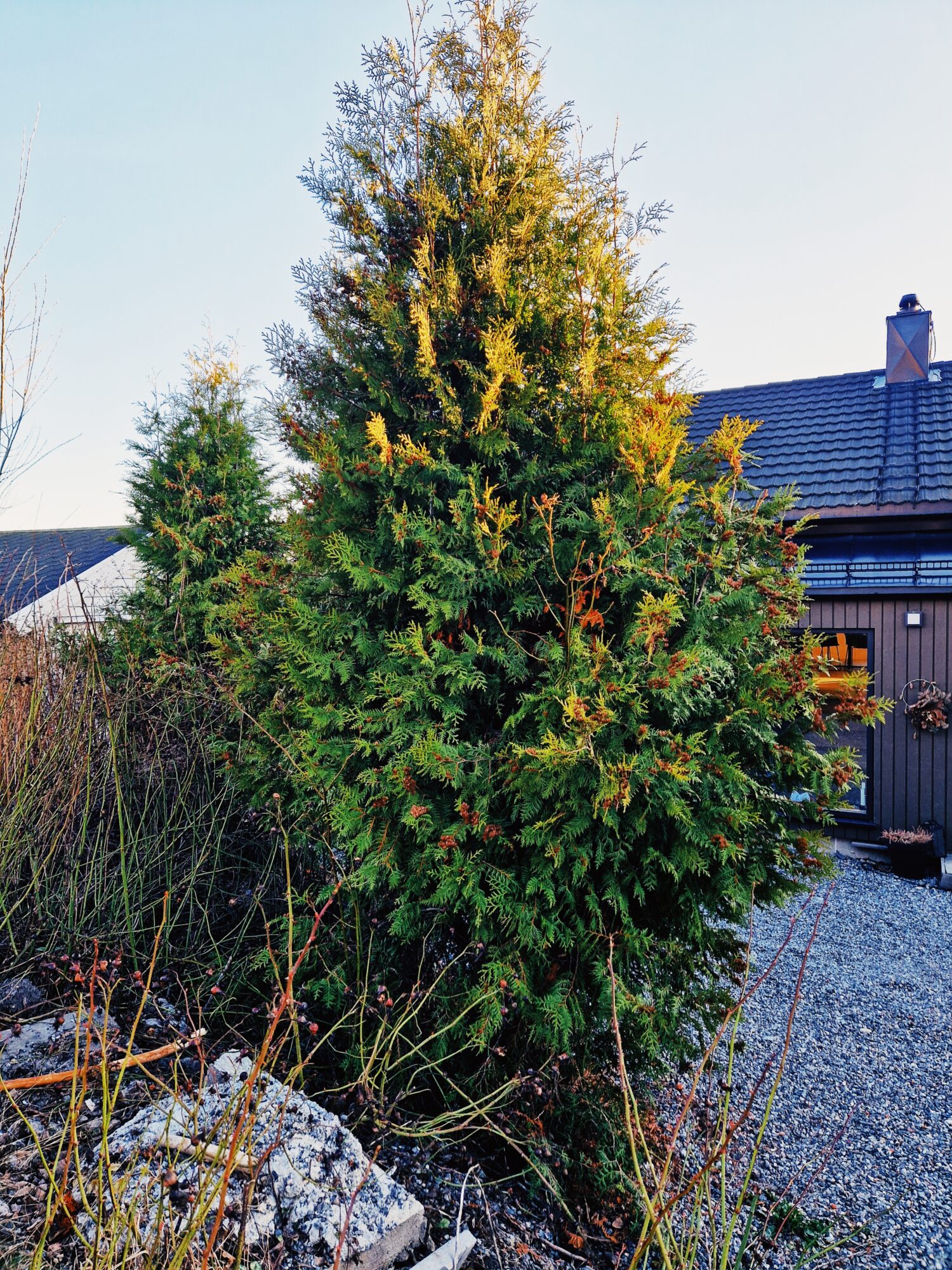
Spring is on its way and so are the thuja hedges. Read our summary here on what you can do if you and your neighbour disagree about the hedge.
Some have hedges placed inside the garden as part of the garden planting. Others have hedges on their property boundary with their neighbour. The hedge then functions as a boundary between the properties. However, a large hedge can present several challenges, for example, poor views, less daylight and reduced sunlight conditions – especially if the hedge becomes very tall and dense.
What can you do if your neighbour's hedge is growing in all directions? Can you prune your neighbour's hedge or demand it be removed?
Neighbour's fence
If the hedge is located on Neighbours' property and does not function as a boundary between the properties, the starting point is that the hedge can be up to two metres high. Hedges that are higher than two metres cannot be closer to the property boundary than one-third of the hedge's height. If the neighbour's hedge is higher than two metres and is closer to the property boundary than one-third of the hedge's height, you can demand that the neighbour either remove or prune the hedge. A prerequisite for this is that the hedge causes you damage or particular inconvenience, and that it is not of particular significance for the neighbour to keep the hedge.
Other rules for hedges in the property boundary
If the hedge is located on the property boundary between you and your neighbour and it grows onto your property, you can demand that your neighbour remove the branches from the hedge that extend more than half a metre onto your property. You may, if you wish, remove the branches yourself if your neighbour does not, but you should inform your neighbour and give them the opportunity to sort it out themselves first. For hedges that stand on the property boundary between you and your neighbour, the starting point is therefore that the hedge can grow half a metre onto your property before you can do anything about it.
However, there are no clear rules on how high a hedge on the property boundary can be. A hedge on the property boundary is often the only dividing line between you and your neighbour, and here the hedge will function as a general fence. The starting point is then that the hedge is maintained so that it does not cause unnecessary or unreasonable inconvenience or damage to the neighbour's property. As a general rule, hedges up to two metres within the boundary will be accepted.
How to resolve the hedge dispute?
As long as the hedge is not a direct nuisance to you as a neighbour, the owner of the hedge has the right to place the hedge on the property boundary between the properties. The main rule is that whoever wants a hedge must bear the costs of establishing it. This applies to both planting the hedge and its maintenance. Furthermore, the starting point is that hedges on the boundary line should be placed on the dividing line at the property boundary.
If the hedge is on the property boundary, it can in some cases be considered a shared boundary marker. It is then natural for the neighbours to also agree on the carrying out of maintenance and the distribution of costs. A written agreement can be useful if you agree on the hedge's height, maintenance, costs, and distribution of responsibility. This can prevent future conflicts.
What do we do for you?
Contact us if you are in doubt about what to do, or if you need help with a conflict in neighbourly relations. Our lawyers have extensive experience in assisting with real estate and can help you find a solution.
Contact person

Benjamin Nordhaug
Contact us